
HEISSNER - Pond Maintenance & Care
For biotopes, garden ponds & fish ponds
Regular pond care is the key to crystal-clear water, balanced water parameters, and the long-term reliability of your pond equipment. The HEISSNER range provides precision-matched tools for both mechanical cleanliness and biological equilibrium—perfectly suited for wildlife ponds, fish habitats, and contemporary ornamental features.
With pond vacuums, you can effectively remove sediment and silt from the floor, while skimming nets are ideal for clearing leaves and algae directly from the surface. Furthermore, water care products enhance chemical stability, and natural zeolite acts as a high-efficiency nutrient binder, significantly reducing the workload on your filtration system. This ensures professional, seasonal care tailored specifically to your pond’s requirements.
Pond Maintenance & Care: 9 items
-
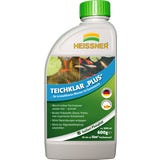
HEISSNER Pond Care - Pond Clear Plus, 1.000 ml
- For clear pond water
- Binds particles that cause cloudiness
- Use as needed
-
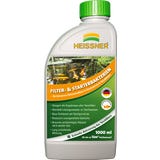
HEISSNER Pond Care - Filter & Starter Bacteria, 1.000 ml
- Helpful microorganisms
- Improve self-cleaning
- Application: season start & around every 3 weeks
-
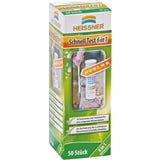
HEISSNER 6-in-1 Quick Test Set for Pond Water
- For precise results
- Incl. colour scale & care tips
- 50 pcs.
-
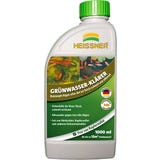
HEISSNER Pond Care - Green Water Clarifier, 1.000 ml
- For algae-free pond water
- Free from heavy metals
- Use as needed
-

HEISSNER Long-Sleeve Pond Gloves, 9 (24cm), L/XL (1 pair)
- Commfortable to wear
- Cuffs with elastic band
- 70% PVC, 30 % cotton
-
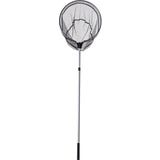
HEISSNER Fish Net, Netz-Größe: 45 x 45 x 20 cm
- Black, wide-mesh net
- Practical telescopic handle
- Ideal for handling fish
-
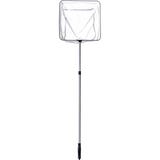
HEISSNER Pond Net, Netz-Größe: 45 x 45 x 20 cm
- Ultra-fine mesh
- High-contrast mesh
- Smoothly adjustable in length
-
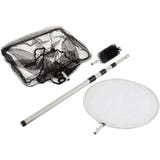
HEISSNER 3-in-1 Pond Cleaning Set
- Flexible cleaning system
- Ergonomic design
- Durable and sturdy
-
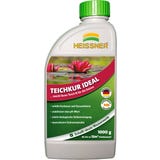
HEISSNER Pond Care - Ideal Pond Treatment, 1.000 g
- Vitalises pond water
- Helps achieve ideal water values
- Apllication: annually & as needed
Optimal pond maintenance intervals
- Surface care (Skimming net): Depending on the wind and overhanging foliage, a quick skim 1–2 times a week is advisable to remove floating debris before it sinks and begins to decay.
- Floor cleaning (Pond vacuum): A thorough removal of sediment and silt should be performed 1–2 times per season.
- Biological water care: Application depends on your specific test results, focusing primarily on the spring reset and peak summer heatwaves.
It is always better to prioritise regular, minor maintenance tasks over radical "complete cleans" to protect the delicate biological equilibrium of your pond.
The ideal schedule for cleaning and pond treatments
- Spring (March to May): The perfect window for a "spring clean." Clear out winter sludge, reactivate your filtration technology, and use a pond treatment programme to stabilise water parameters for the new season.
- Summer (June to August): During the peak season, the focus shifts to monitoring. Use water care products specifically for algae blooms. Avoid major cleaning operations during extreme heat to prevent stressing your fish.
- Autumn (September to October): The goal here is to minimise nutrient ingress. Skim off leaves consistently or install a pond net to prevent sludge formation over the winter months.
The causes of pond sludge
- Sediment formation is an unavoidable part of a pond's lifecycle, caused by:
- Decomposed plant matter and algae remains.
- Wind-blown leaves, pollen, and blossom debris.
- Fish waste and uneaten fish food.
- Atmospheric dust and suspended particles.
If this sludge remains on the floor for too long, anaerobic decomposition occurs, which consumes vital oxygen and triggers massive algae growth by releasing stored nutrients back into the water.
Checklist for holistic pond maintenance
- To ensure a stable ecosystem, you should combine the following measures:
- Mechanical removal of foreign matter (with nets, vacuums, skimmers).
- Regular inspection and cleaning of filter media and pumps.
- Systematic testing of core water parameters (pH, KH, Nitrite).
- Targeted use of biological aids and nutrient binders.
By following this routine, you'll guarantee a consistently clear garden pond or koi pond that remains in perfect ecological equilibrium.
Magazine Articles:
Discover Bloomling:
-
Ireland: Free standard delivery from € 64,90
-
Free
returns More than 11.700 products
Secure payments
with SSL encryption technology
